


FINAL WEEKS
Now Open: Limited Engagement
Sybil B. Harrington Gallery, Level 3
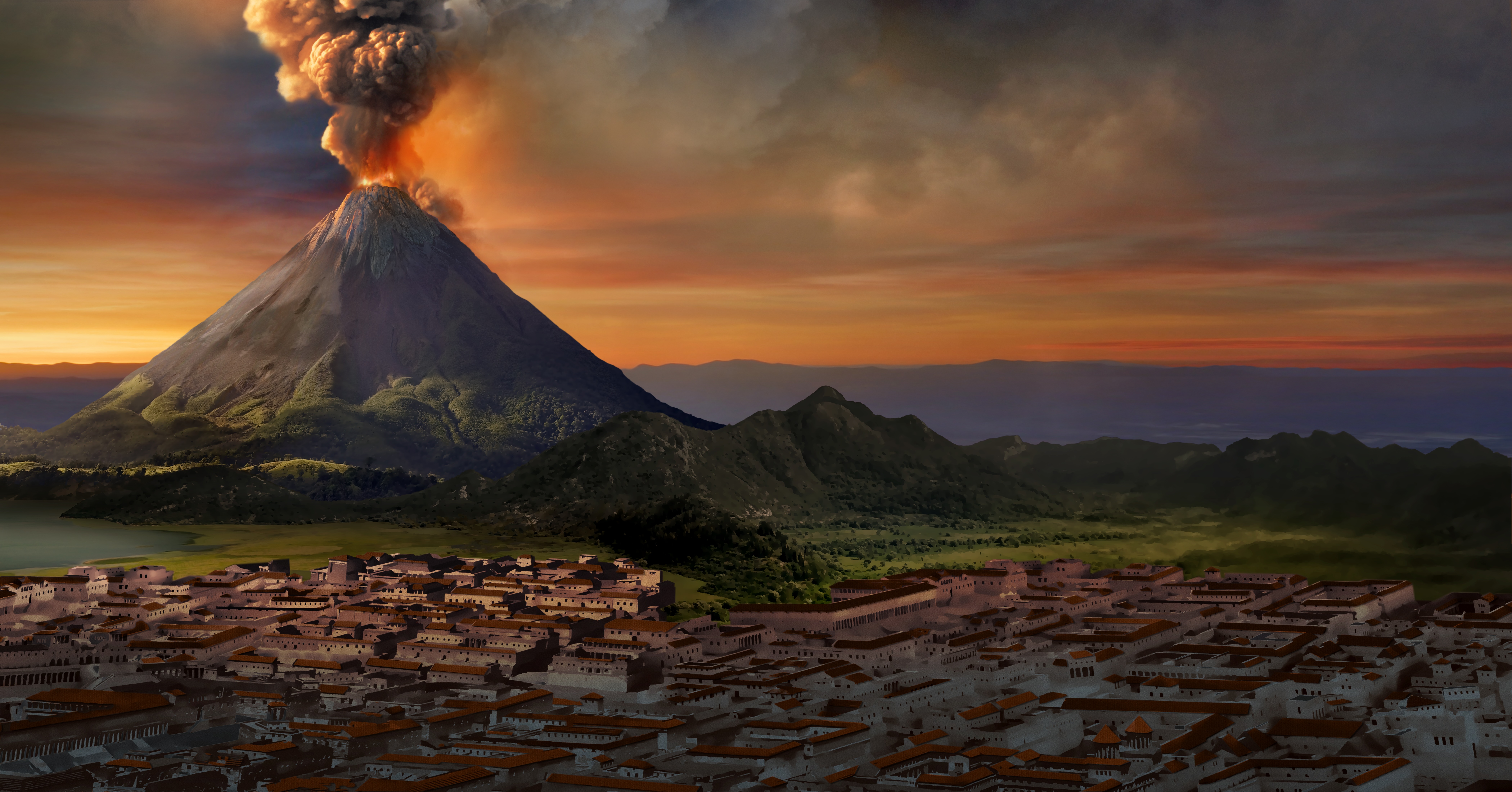
A volcano awakens. A city vanishes. Through 150 artifacts, POMPEII: THE EXHIBITION tells the tale of a city hidden from view and forgotten for centuries.
POMPEII: THE EXHIBITION is an add-on experience and requires a separate ticket in addition to your Arizona Science Center admission.
POMPEII: THE EXHIBITION, finishes its North American tour at the Arizona Science Center, located in Phoenix, AZ. The exhibition examines the lives of residents of Pompeii before and after the catastrophic eruption of Mount Vesuvius on August 24th, 79 A.D. Over 150 artifacts on loan from the collections of the Naples National Archaeological Museum in Italy and the Archaeological Park of Pompeii will be displayed when the exhibition opens on November 15, 2025, for a limited time.
Visitors to the exhibition will travel back in time to 79 A.D. when Pompeii bustled as a commercial port and strategic military and trading city. In a media-rich, object-based, immersive experience, they will learn how the people of Pompeii lived, loved, worked, worshipped and found entertainment.
Featuring over 150 artifacts including frescoes, mosaics, and statues, hidden from view and forgotten for centuries until rediscovery over 250 years ago. The sudden disaster that destroyed Pompeii also preserved it and over time archaeologists have uncovered a unique record of its daily life — roads, buildings, municipal services, paintings, mosaics, artifacts, and even preserved bodies. Ongoing excavations at the site provide an ever-evolving picture of everyday life at the height of the Roman Empire.

POMPEII: THE EXHIBITION Includes:
- Introductory theatre where the scene is set in a video with dramatic reconstructions that describe Pompeii and the nearby volcano.
- Visitors are then transported back in time to 79 A.D. and find themselves in a reproduced atrium from a Roman villa, where they will embark on a journey through the ancient city.
- Through the use of projections, audio, video, photographic murals, and graphic reproductions of frescoes and mosaics, visitors will experience different locations that existed in the city, including a market, a temple, theater, and baths.
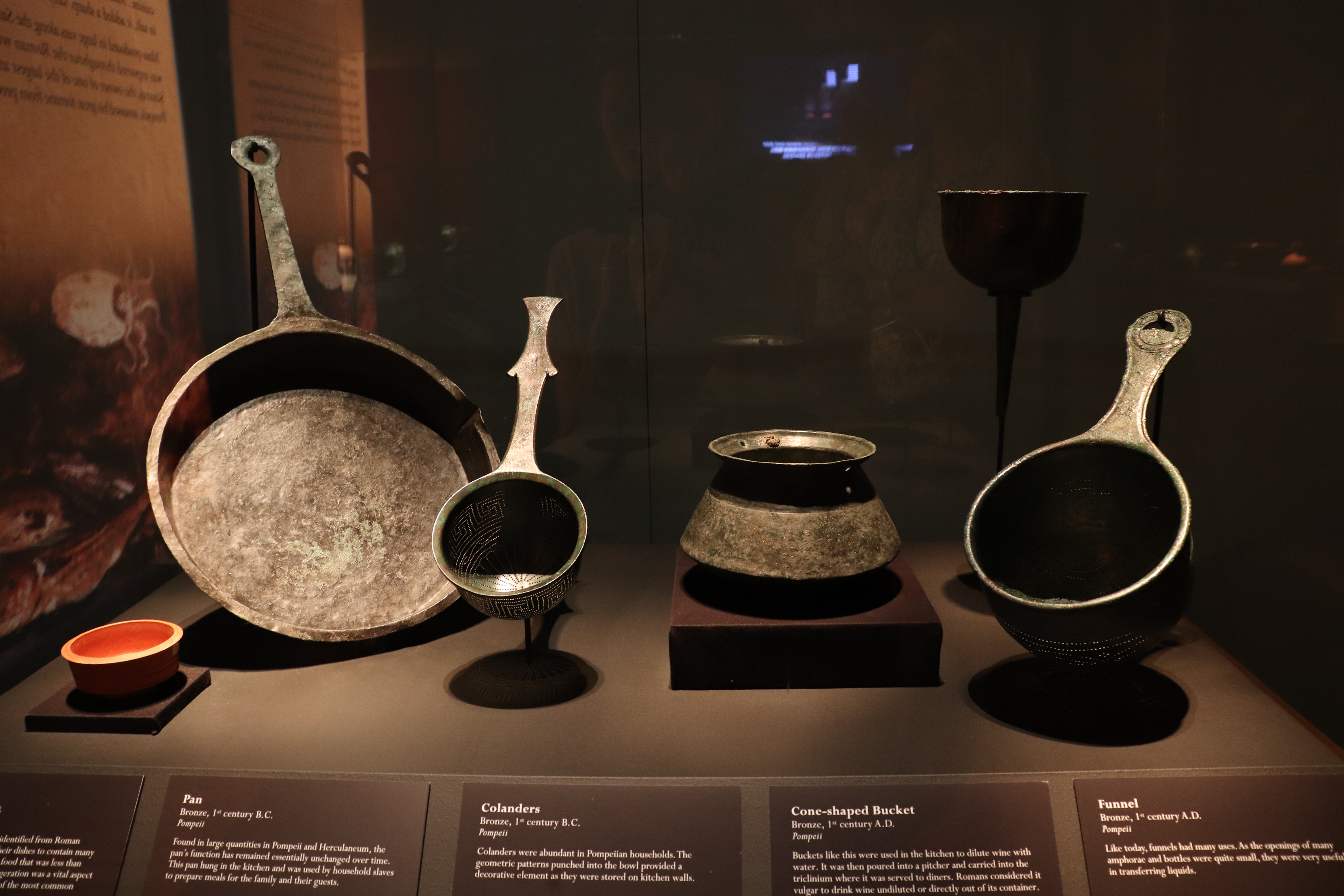
- Over 150 authentic artifacts will help bring the story of Pompeii to life. These remarkable objects include: Mosaics and frescoes, gladiator helmets, armor, and weapons, a ship’s anchor, lamps, jugs, cups, plates, pots and pans and other household objects and furniture, jewelry, medical instruments, and tools.
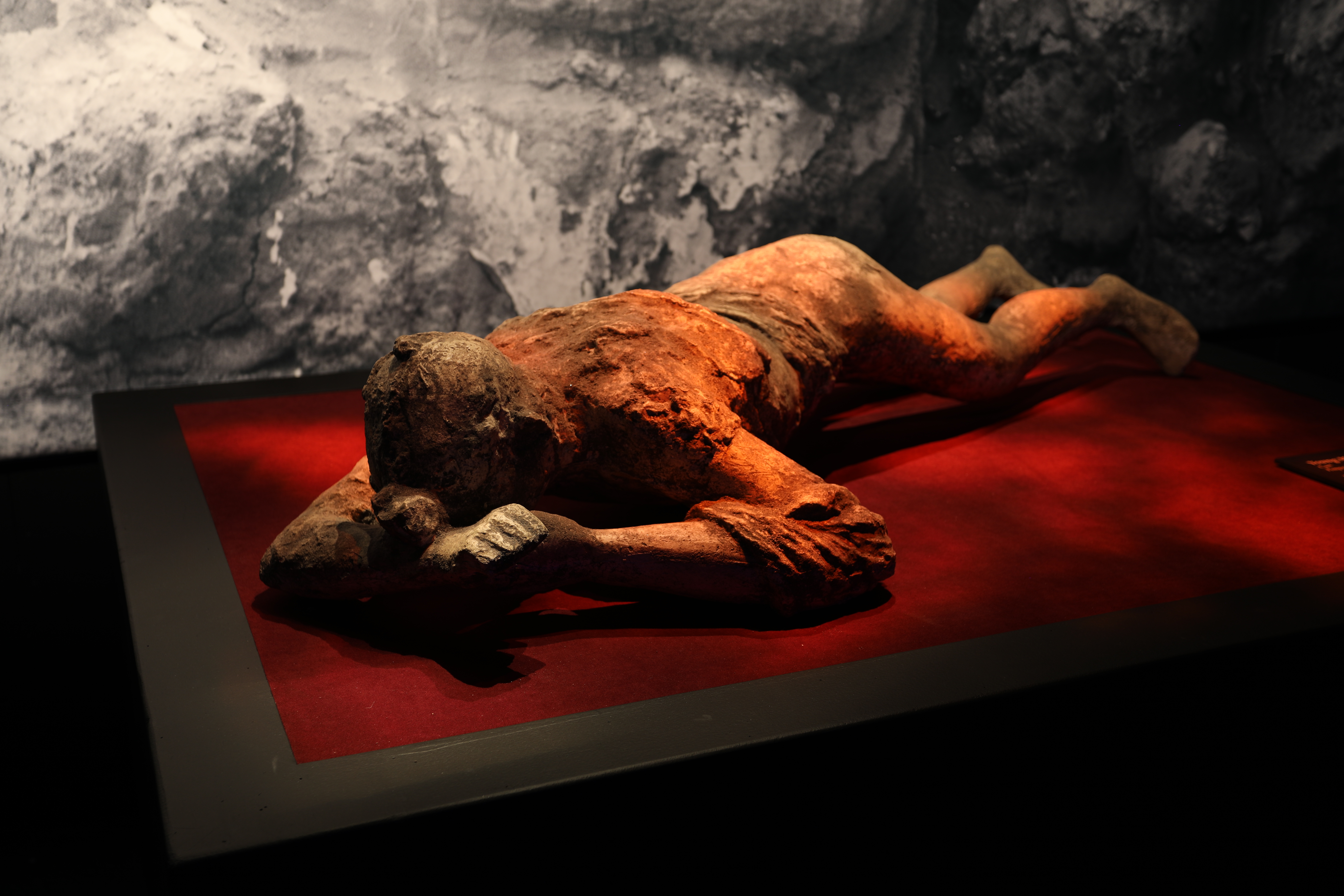
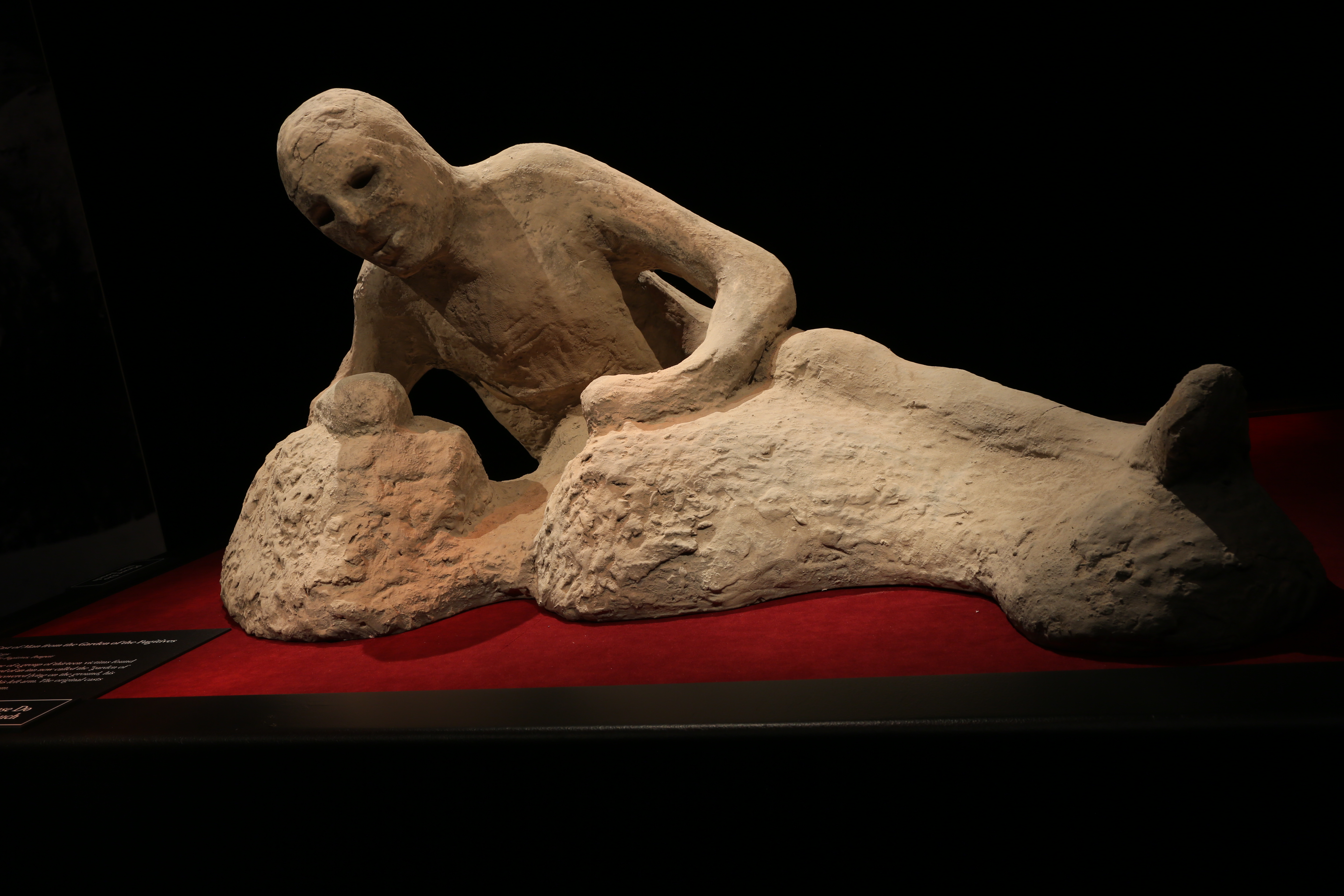
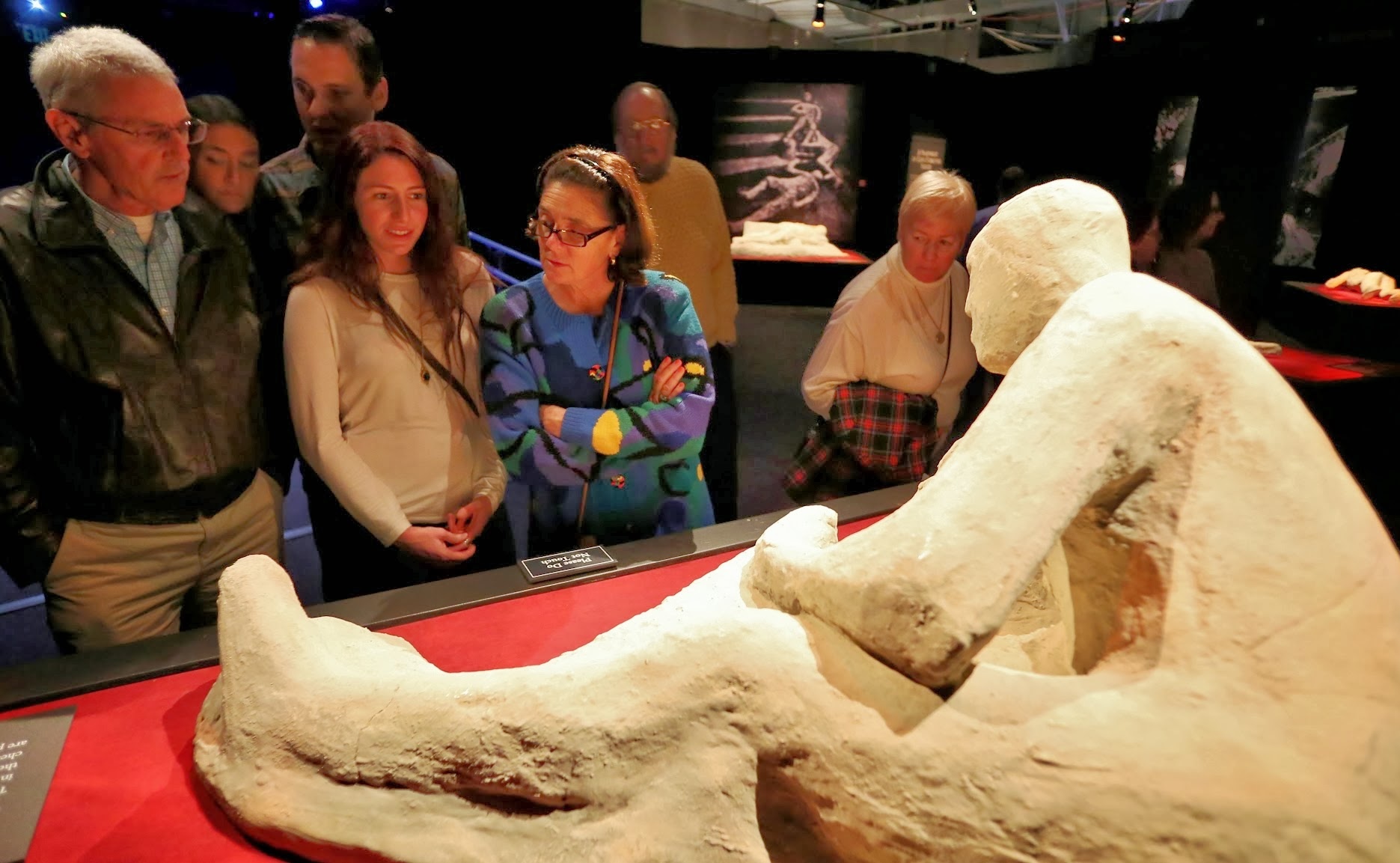
- A simulated eruption will allow visitors to experience the deathly impact Mount Vesuvius had on this ancient city, culminating in the reveal of full body casts of twisted human forms, asphyxiated by extreme heat and noxious gases and forever frozen in time.
Pricing
This is a premium add-on experience and requires a separate purchase from Arizona Science Center admission.
Daytime Pricing
Members: $15.00
Includes Anytime Access & Audio Tour
Premium Ticket: $20.00
Includes Anytime Access & Audio Tour
Timed Ticket: $17.00
Additional Add-On — Audio Tour: $5.00
For groups of 15 or more, please contact groups@azscience.org for pricing and additional information.
Audio Guide
Included with Member and Premium Tickets.
Available as a $5.00 Add-On
Use your phone camera to scan, identify, and explore the objects in the exhibition. Available on both iOS and Android as a web app. Please be sure to bring headphones to listen on your smartphone as you tour the exhibition.
Educator Guides
Arizona Science Center is excited to bring POMPEII: THE EXHIBITION to Arizona. With more than 150 artifacts on loan from the Naples National Archeological Museum in Italy, this exhibition brings to life the story of the ancient Roman city forever memorialized by the catastrophic eruption of Mount Vesuvius on August 24, 79 AD.
You and your students will experience daily life of this once-vibrant Roman city as you move through the amazing artifacts that were excavated from under the 8 feet of ash that preserved them for more than 2000 years. Artifacts for view include the wardrobe of a Roman soldier consisting of a helmet, body armor, and weapons, as well as everyday household items such as lamps, pots, pans, and furniture.
As part of the 4-D Eruption Theater you and your students will gain firsthand experience living at the edge of Mount Vesuvius on the morning of the eruption. You will also see the body casts of residents forever frozen in time as they realize the results of this catastrophic event.
Please note, POMPEII: THE EXHIBITION includes themes and objects that may be considered sensitive or controversial, including body casts and a Roman brothel. The brothel is marked and can easily be bypassed as part of the field trip.
To book your field trip today, please contact a member of our Reservations Team at 602.716.2000 Ext. 244 or groups@azscience.org.
POMPEII: THE EXHIBITION is a premium add-on experience and requires a separate purchase from Arizona Science Center admission.
Bring ancient Pompeii to life in your classroom — click on the links below to view the free educator guides that turn history into an unforgettable lesson.
Elementary Educator Guide | Arizona Standards Alignment
ELEMNTARY SCHOOL educator guide
- Grade 3
- 3.SP1.2 Compare life in specific historical time periods to life today.
- 3.SP3.6 Construct arguments and explanations using reasoning, examples, and details from sources.
- 3.SP3.7 Present summaries of arguments and explanations using print, oral, and digital technologies.
- 3.SP4.1 Explain probable causes and effects of events.
- Grade 4
- 4.SP1.2 Compare life in specific historical time periods to life today.
- 4.SP3.6 Present summaries of arguments and explanations using print, oral, and digital technologies.
- 4.SP4.1 Explain probable causes and effects of events and developments.
- Grade 5
- 5.SP1.2 Explain how events of the past affect students’ lives and society.
- 5.SP3.7 Construct and present explanations using reasoning, correct sequence, examples, and details with relevant information and data.
- 5.SP4.1 Explain probable causes and effects of events
- 5.SP4.2 Use evidence to develop a claim about the past.
- 5.SP4.3 Summarize the central claim in a secondary source.
English Language Arts (ELA)
- Grade 3
- 3.RI.4: Determine the meaning of general academic and domain-specific words and phrases in a text relevant to a grade 3 topic or subject area.
- 3.RI.7: Draw on information from multiple print or digital sources, demonstrating the ability to locate an answer to a question quickly or to solve a problem efficiently.
- Grade 4
- 4.RI.4: Determine the meaning of general academic and domain-specific words and phrases in a text relevant to a grade 4 topic or subject area.
- 4.RI.7: Draw on information from multiple print or digital sources, demonstrating the ability to locate an answer to a question quickly or to solve a problem efficiently.
- Grade 5
- 5.RI.4: Determine the meaning of general academic and domain-specific words and phrases in a text relevant to a grade 5 topic or subject area.
- 5.RI.7: Draw on information from multiple print or digital sources, demonstrating the ability to locate an answer to a question quickly or to solve a problem efficiently.
Mathematics
- Grade 3
- 3.MD.A.2: Measure and estimate liquid volumes and masses of objects using metric units. (Excludes compound units such as cm3 and finding the geometric volume of a container.) Add, subtract, multiply, or divide to solve one-step word problems involving masses or volumes that are given in the same units. Excludes multiplicative comparison problems (problems involving notions of “times as much”).
- 3.MD.B.3: Create a scaled picture graph and a scaled bar graph to represent a data set with several categories. Solve one- and two-step "how many more" and "how many less" problems using information presented in scaled bar graphs.
- Grade 4
- 4.MD.A.1: Know relative sizes of measurement units within one system of units, which could include km, m, cm; kg, g; lb, oz.; l, ml; hr, min, sec. Within a single system of measurement, express measurements in a larger unit in terms of a smaller unit and in a smaller unit in terms of a larger unit. For example, know that 1 ft is 12 times as long as 1 in. Express the length of a 4 ft snake as 48 in. Generate a conversion table for feet and inches listing the number pairs (1,12), 2,24), (3,36)
- 4.MD.A.2: Use the four operations to solve word problems and problems in real-world context involving distances, intervals of time (hr, min, sec), liquid volumes, masses of objects, and money, including decimals and problems involving fractions with like denominators, and problems that require expressing measurements given in a larger unit in terms of a smaller unit. Represent measurement quantities using a variety of representations, including number lines that feature a measurement scale.
- Grade 5
- 5.MD.A.1: Convert among different-sized standard measurement units within a given measurement system, and use these conversions in solving multi-step, real-world problems.
Science
- Grade 4
- 4.E1U1.8 Collect, analyze, and interpret data to explain weather and climate patterns.
Middle School Educator Guide | Arizona Standards Alignment
Social Studies
- Grade 6
- 6.G1.1 Use and construct maps, graphs, and other representations to explain relationships between locations of places and regions.
- 6.G2.1 Compare diverse ways people or groups of people have impacted, modified, or adapted to the environment of the Eastern Hemisphere.
- 6.G3.1 Analyze how cultural and environmental characteristics affect the distribution and movement of people, goods, and ideas.
- 6.G3.2 Analyze the influence of location, use of natural resources, catastrophic environmental events, and technological developments on human settlement and migration.
- 6.H1.1 Compare the development and characteristics of historical cultures and civilizations from different global regions within designated time periods.
- 6.SP1.2 Analyze connections among events and developments in various geographic and cultural contexts.
- 6.SP1.4 Evaluate the significance of past events and their effect on students’ lives and society. identify further areas of inquiry and additional sources.
- 6.SP3.1 Define and frame compelling and supporting questions about issues and events in the time-period and region studied.
- 6.SP3.5 Use questions generated about multiple sources to
- 6.SP3.6 Construct and present arguments using claims and evidence from multiple sources.
- 6.SP3.7 Construct and present explanations using reasoning, correct sequence, examples and details with relevant information and data.
- Grade 7
- 7.G1.1 Use and construct maps and other geographic representations to explain the spatial patterns of cultural and environmental characteristics.
- 7.G1.2 Analyze various geographic representations and use geographic tools to explain relationships between the location of places and their environments.
- 7.G3.1 Explain how changes in transportation, communication, and technology influence the spatial connections among human settlements and affect the diffusion of ideas and cultural practices.
- 7.G3.2 Analyze how relationships between humans and environments extend or contract patterns of settlement and movement.
- 7.SP1.1 Analyze connections among events and developments in broader historical contexts.
- 7.SP1.4 Use questions generated about individuals and groups to analyze why they, and the developments they shaped, are historically significant.
- 7.SP3.1 Create compelling questions and supporting questions that reflect enduring issues about the world, past and present.
- 7.SP3.2 Use evidence drawn from multiple sources to develop and support claims and counterclaims in response to compelling questions.
- 7.SP3.3 Detect possible limitations in the historical record based on evidence collected from various kinds of historical sources.
- 7.SP3.4 Use questions generated about multiple sources, including international sources, to identify further areas of inquiry and additional sources.
- 7.SP3.5 Evaluate the relevance and utility of sources based on information such as author, date, origin, intended audience, and purpose.
- Grade 8
- 8.G1.1 Use geographic tools and representations to analyze historical and modern political and economic issues and events. •
- 8.G2.2 Evaluate how political, social, and economic decisions throughout time have influenced cultural and environmental characteristics of various places and regions.
- 8.SP1.1 Analyze connections among events and developments in broader historical contexts.
- 8.SP1.4 Use questions generated about individuals and groups to analyze why they, and the developments they shaped, are historically significant.
- 8.SP3.1 Create and answer compelling and supporting questions that reflect enduring issues in the field of history and social science.
- 8.SP3.2 Detect possible limitations in the historical record based on evidence collected from various kinds of historical sources.
- 8.SP3.3 Use questions generated about multiple historical sources to identify further areas of inquiry and additional sources.
- 8.SP3.4 Evaluate the relevance and utility of historical sources based on information such as author, date, origin, intended audience, and purpose.
ELA
- Grade 6
- 6.RL.1: Cite specific textual evidence to support analysis of informational texts.
- 6.RL.2: Determine a theme or central idea of a text and how it is conveyed through particular details; provide a summary of the text distinct from personal opinions or judgments.
- 6.RL.4: Determine the meaning of words and phrases as they are used in a text, including figurative and connotative meanings; analyze the impact of specific word choices on meaning and tone, including analogies or allusions to other texts.
- 6.RI.4: Determine the meaning of words and phrases as they are used in a text, including figurative, connotative, and technical meanings.
- 6.RI.7: Integrate information presented in different media or formats (e.g., visually, quantitatively) as well as in words to develop a coherent understanding of a topic or issue.
- Grade 7
- 7.RL.1: Cite several pieces of textual evidence to support analysis of what the text says explicitly as well as inferences drawn from the text.
- 7.RL.2: Determine a theme or central idea of a text and analyze its development over the course of the text; provide an objective summary of the text.
- 7.RL.4: Determine the meaning of words and phrases as they are used in a text, including figurative and connotative meanings; analyze the impact of specific word choices on meaning and tone, including rhymes and other repetitions of sounds (e.g., alliteration) on a specific verse or stanza of a poem or section of a story or drama.
- 7.RI.4: Determine the meaning of words and phrases as they are used in a text, including figurative, connotative, and technical meanings; analyze the impact of specific word choices on meaning and tone.
- 7.RI.7: Compare and contrast a text to an audio, video, or multimedia version of the text, analyzing each medium’s portrayal of the subject (e.g., how the delivery of a speech affects the impact of the words).
- Grade 8
- 8.RL.1: Cite the textual evidence that most strongly supports an analysis of what the text says explicitly as well as inferences drawn from the text.
- 8.RL.2: Determine a theme or central idea of a text and analyze its development over the course of the text, including its relationship to the characters, setting, and plot; provide an objective summary of the text.
- 8.RL.4: Determine the meaning of words and phrases as they are used in a text, including figurative and connotative meanings; analyze the impact of specific word choices on meaning and tone, including analogies or allusions to other texts.
- 8.RI.4: Determine the meaning of words and phrases as they are used in a text, including figurative, connotative, and technical meanings; analyze the impact of specific word choices on meaning and tone, including analogies or allusions to other texts
- 8.RI.7: Evaluate the advantages and disadvantages of using different mediums (e.g., print or digital text, video, multimedia) to present a particular topic or idea.
Math
- Grade 6
- 6.EE.C.9: Use variables to represent two quantities that change in relationship to one another to solve mathematical problems and problems in real-world context. Write an equation to express one quantity (the dependent variable) in terms of the other quantity (the independent variable). Analyze the relationship between the dependent and independent variables using graphs and tables, and relate these to the equation.
- 6.NS.B.2: Fluently divide multi-digit numbers using a standard algorithm.
Science
- Grade 7
- 7.E1U1.6 Construct a model to explain how the distribution of fossils and rocks, continental shapes, and seafloor structures provides evidence of the past plate motions.
- Grade 8
- 8.E1U3.7 Obtain, evaluate, and communicate information about data and historical patterns to predict natural hazards and other geological events.
High School School Educator Guide | Arizona Standards Alignment
Social Studies
- Grades 9-12
- HS.SP1.1 Evaluate how events and developments were shaped by unique circumstances of time and place as well as broader contexts.
- HS.SP1.2 Analyze change and continuity in historical eras.
- HS.SP3.1 Develop and frame questions about issues and events in the discipline and determine the types of sources that will be helpful in answering these questions.
- HS.SP3.2 Gather relevant information from multiple sources representing a wide range of views while using origin, authority, structure, context, and corroborative value of the source to guide the selection.
- HS.SP3.3 Analyze the relationship between primary sources and the secondary interpretations made from them including possible limitations in various kinds of evidence and differing secondary interpretations.
- HS.SP3.5 Use questions generated about multiple historical sources to pursue further inquiry and investigate additional sources.
- HS.SP3.6 Construct and present arguments using precise and knowledgeable claims, with evidence from multiple sources, while acknowledging counterclaims and evidentiary weaknesses.
- HS.E3.1 Explain how buyers and sellers interact to create markets and market structures.
- HS.G1.1 Use geographic data to explain and analyze relationships between locations of place and regions
- HS.G1.2 Use geospatial tools and related technologies to construct relevant geographic data to explain spatial patterns and relationships.
- HS.G2.1 Analyze interactions within and between human and physical systems.
- HS.G2.2 Evaluate how political and economic decisions throughout time have influenced cultural and environmental characteristics of various places and regions.
- HS.G2.3 Evaluate the impact of human settlement on the environment and culture of specific places and regions.
- HS.G3.4 Evaluate the consequences of human-made and natural catastrophes on global trade, politics, and human migration settlement.
ELA
- Grades 9-10
- 9-10.RL.1: Cite strong and thorough textual evidence to support analysis of what the text says explicitly as well as inferences drawn from the text
- 9-10.RL.2: Determine a theme or central idea of a text and analyze in detail its development over the course of the text, including how it emerges and is shaped and refined by specific details; provide an objective summary of the text.
- 9-10.RL.4: Determine the meaning of words and phrases as they are used in the text, including figurative and connotative meanings; analyze the cumulative impact of specific word choices on meaning and tone.
- 9-10.RI.1: Cite strong and thorough textual evidence to support analysis of what the text says explicitly as well as inferences drawn from the text.
- 9-10.RI.4: Determine the meaning of words and phrases as they are used in a text, including figurative, connotative, and technical meanings; analyze the cumulative impact of specific word choices on meaning and tone.
- 9-10.RI.6: Determine an author’s point of view or purpose in a text and analyze how an author uses rhetoric to advance that point of view or purpose.
- Grades 11-12
- 11-12.RL.1: Cite strong and thorough textual evidence to support analysis of what the text says explicitly as well as inferences drawn from the text, including determining where the text leaves matters uncertain.
- 11-12.RL.2: Determine two or more themes or central ideas of a text and analyze their development over the course of the text, including how they interact and build on one another to produce a complex account; provide an objective summary of the text.
- 11-12.RL.4: Determine the meaning(s) of words and phrases as they are used in a text, including figurative and connotative meanings, while analyzing the impact of specific choices on meaning and tone.
- 11-12:RI.1: Cite strong and thorough textual evidence to support analysis of what the text says explicitly as well as inferences drawn from the text, including determining where the text leaves matters uncertain.
- 11-12.RI.4: Cite strong and thorough textual evidence to support analysis of what the text says explicitly as well as inferences drawn from the text, including determining where the text leaves matters uncertain.
- 11-12.RI.6: Determine an author’s point of view or purpose in a text in which the rhetoric is particularly effective, analyzing how style and content contribute to the effectiveness of the text.
Math
- High School
- G.G-GMD.A.3 Use volume formulas for cylinders, pyramids, cones, and spheres to solve problems utilizing real-world context.
- G.G-GMD.B.4 Identify the shapes of two-dimensional cross-sections of three-dimensional objects, and identify three-dimensional objects generated by rotations of two-dimensional objects.
- G.G-MG.A.1 Use geometric shapes, their measures, and their properties to describe objects utilizing real-world context.
- G.G-MG.A.3 Apply geometric methods to solve design problems utilizing real-world context.
Science
- High School
- HS.E1U3.14 Engage in argument from evidence about the availability of natural resources, occurrence of natural hazards, changes in climate, and human activity and how they influence each other.
Frequently Asked Questions
Planning your visit? We’ve gathered the most common questions to help you make the most of your experience. Below you’ll find quick answers about the exhibition, ticketing, accessibility, and general visit information. Whether it’s your first time or a return visit, this guide will help you feel prepared and confident before you arrive.
The exhibition is generally the least busy on weekday afternoons. If you’re interested in seeing this exhibit with fewer guests in the galleries, we recommend visiting then.
A self guided audio tour is available for use on personal devices and can be purchased either seperately or as included with certain tickets. The are no docent tours of this exhibition at this time.
We generally recommend this exhibit for visitors aged 12 and up. However, we ultimately allow parents and guardians decide if their child is mature enough for this exhibition and its content. Our exhibition is professionally curated to provide a thought-provoking and educational experience.
The exhibition is open through April 2026 for a limited time before the objects must return to Italy.
To ensure your preferred date and time, pre-purchased tickets are highly recommended.
You can use your phone or camera to take pictures, but flash, tripods, selfie sticks, or any other devices that can disturb the other visitors’ movements or vision are not allowed.
Both Arizona Science Center and the Exhibion are wheelchair accessible.
In addition to the audio guide, we can provide a text-based version of the guide. All displays and objects throughout the exhibit have individual descriptions, and all videos are subtitled.
Ticketing FAQ
You can buy tickets at www.azscience.org
You can reach out to Arizona Science Center via email at hello@azscience.org or via phone at 602.716.2000
You can reach out to the Arizona Science Center via email at hello@azscience.org or via phone at 602.716.2000
We recommend that all guests arrive at the venue at least 15 minutes prior to the time stated on their ticket. Due to the high volume of visitors to the exhibition, immediate access to the galleries is not guaranteed and guests should expect to queue briefly before entering the exhibition.
There are no refunds and no cancellations except as expressly outlined in this ticket exchange policy. The deadline for all exchanges is 24 hours before the date and time on the original ticket. To request a refund or exchange, please email Arizona Science Center Guest Sales and Services Team.
Patrons supporting persons with disabilities receive free admission to the exhibit and do not require an entry ticket. At no time will a patron with a disability who is accompanied by a support person be prevented from having access to their support person while on the exhibit premises.
A group discount is available for groups of 15 or more. Please visit our group ticket page to submit your group booking request.
There is special pricing available for seniors and children. There are also discounts for groups of 15+. Please visit our group ticket page to submit your group booking request.
General FAQ
We encourage you to leave valuables, large bags, and other personal belongings at home. For the safety of our visitors and the collection, all bags entering or leaving the exhibit, including purses, are subject to inspection.
Backpacks, suitcases, and duffle bags are not permitted in the exhibition.
Wheelchairs, walkers, and scooters are all permitted.
Service animals are permitted, but please be advised that the volume and visuals may be uncomfortable for animals. For non-traditional service animals please contact us in advance.
Strollers are permitted within the premises; however, to ensure the safety and comfort of all guests, we kindly ask that they not be brought into the gallery area.
Please consider parking your strollers at the designated area near the self-serve coat check before exploring the exhibition. Our staff will be happy to assist you in finding the appropriate spot for your stroller.
Arizona Science Center has restrooms available on the first and third levels of the building. Unisex or companion-assisted restrooms are also available near the main lobby near the membership desk. There are 3 restroom locations on level 1: one between the membership check-in desk and the gift shop, one behind the Daniel Cracchiolo Demonstration Stage and one in the eastern most area of the All About Me gallery. There is one restroom area on level 3 inside the Forces of Nature gallery.
Arizona Science Center is located between 5th and 7th Street on Washington Street in Heritage & Science Square. The entrance is accessible from Heritage Square, facing Monroe Street. The Heritage and Science Park Garage is conveniently located on 5th Street and Monroe Street. The Center will validate your parking pass to receive a discounted price on parking—only valid at the Heritage Parking Garage. Parking validation and discounted rates are not offered for any other garage including Phoenix Convention Center garages.
Please bring your Heritage Garage parking ticket with you. Parking validation is available at the Information Zone, Ticket Counter, and Membership Zone.
Backpacks, suitcases, and duffle bags are not permitted in the exhibit.
Weapons of any kind, including firearms, mace, pepper spray, knives, sharp objects, bats, clubs, tasers, etc.
Outside food or beverage (Water bottles with sealable caps are permissible) (Exceptions will be made for those with medical requirements and/or special needs.
Professional camera equipment (e.g., monopods; bipods; tripods; selfie-sticks, etc.).
Laser pointers or flashlights.
Illegal drugs/alcoholic substances (current prescription medication in the original container is permitted, provided the guest produces identification matching the prescription container).
Cans (including aerosols), bottles, boxed liquids, metal, glass, or other insulated containers.
Pets, other than service animals.
Signs, posters, or garments with offensive language, phrasing, or symbols.
Noisemakers, air horns, bells, bull horns, whistles, etc.
Plan Your Visit Today!
POMPEII: THE EXHIBITION will be open daily from November 15, 2025, through April 12, 2026, in the Sybil B. Harrington Gallery, Level 3.